Compare
Online vs hands-on composite bonding courses: which actually changes your dentistry?
Online courses are cheap and convenient. They're good for theory. Composite bonding is a manual skill. What each format can and can't teach you, what to ask before paying for either, and how to combine them.
 Dr Albert GajdosUpdated 13 September 20267 min read
There is a fair case for online composite courses: they’re inexpensive, you can watch at 11pm, and a good one shows you complete cases you’d never see in your own surgery. There is also a hard limit. Composite bonding is a manual skill, and the part that decides your results, what your hands do with the material, doesn’t travel through a screen. This guide is about being honest with yourself about which part you need.
What online courses do well
- Theory at your own pace — smile design principles, proportion, shade selection, adhesion, the order of operations.
- Seeing cases — a well-filmed case shows the plan, the isolation, every layer and the finish in a way a live demo can’t pause.
- Reference — you can rewatch a step the night before a case.
- Cost and access — a fraction of the price of a hands-on course, no travel, no day out of surgery.
What only happens at the bench
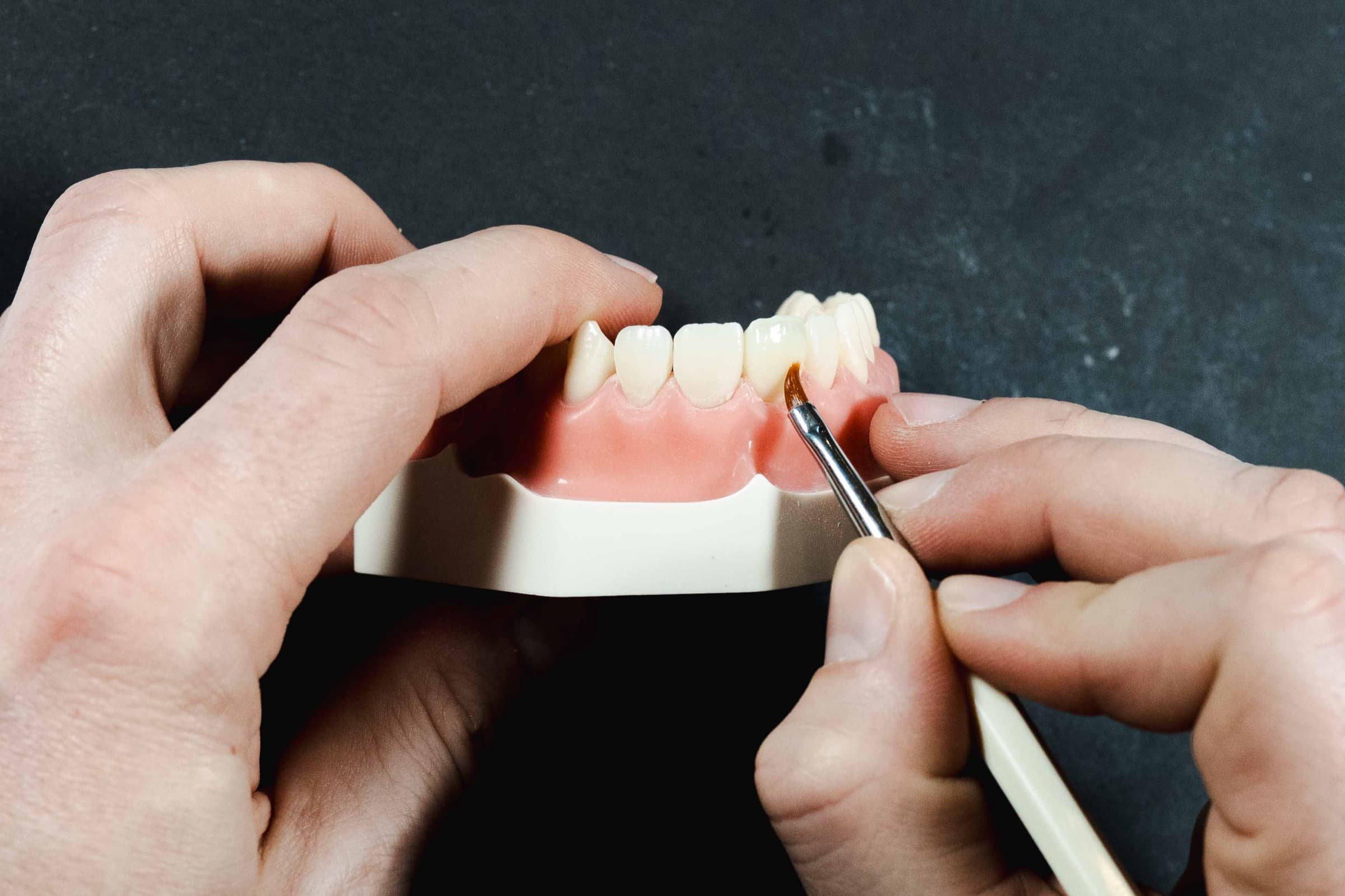
Four things decide whether anterior composite looks good and lasts, and none of them can be learned by watching:
- Material handling. How much a packable composite resists, how a flowable moves at a margin, how to stop the material dragging or slumping.
- Contouring under instrument pressure. Line angles, emergence, the incisal edge — the difference between “a bit bulky” and natural is a few tenths of a millimetre of pressure you can’t see on a video.
- Isolation and matrices in real time. Placing a matrix, getting a tight contact, closing a diastema without a ledge — every one is a small physical trick.
- Finishing and polishing. Knowing when to stop, which grit, how hard, how long. Most “my composites stain” problems are finishing problems.
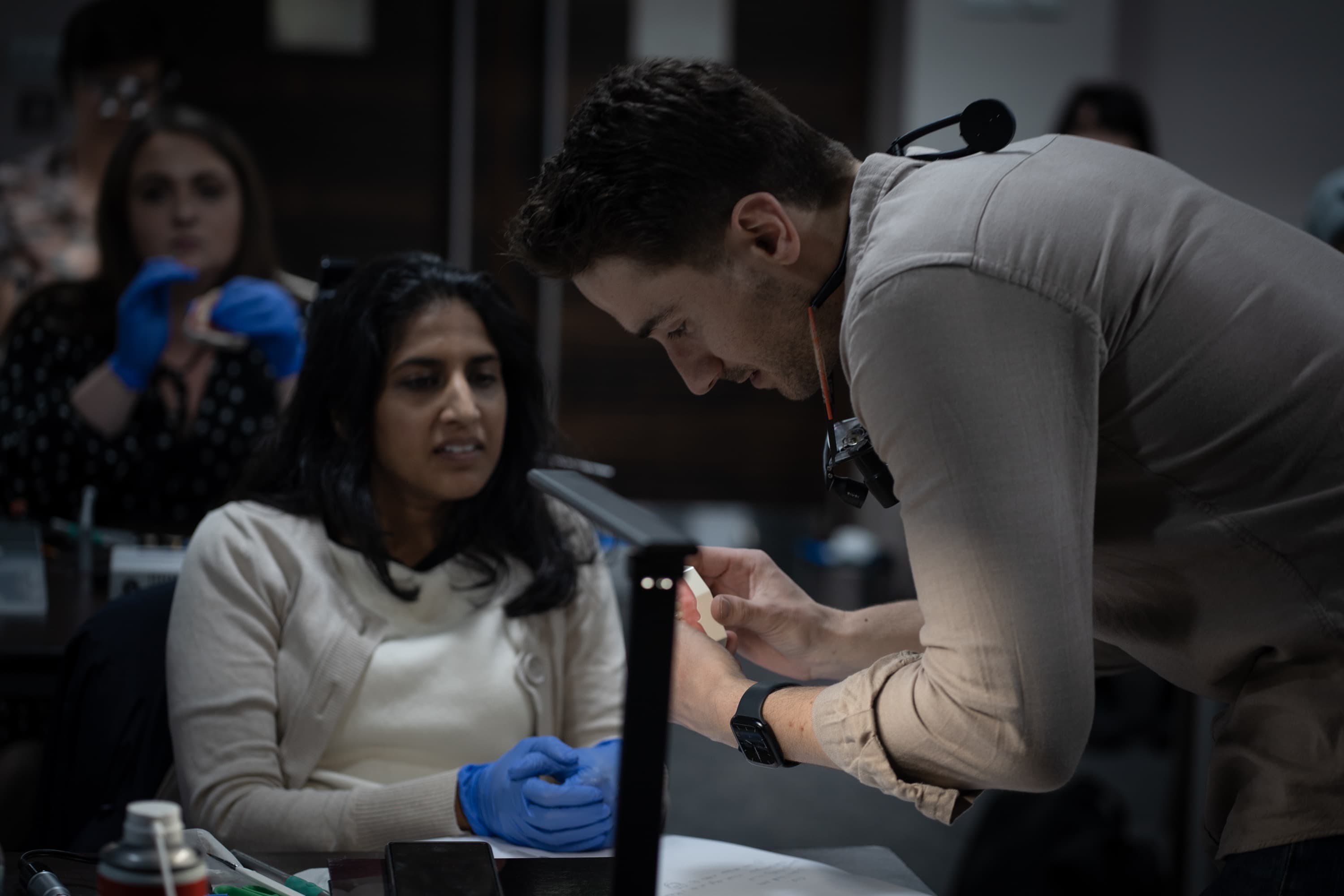
- Questions answered in real time. On an in-person, hands-on course the instructor is right there, so your questions are answered as they pop into your head — no waiting, instant clarification and learning.
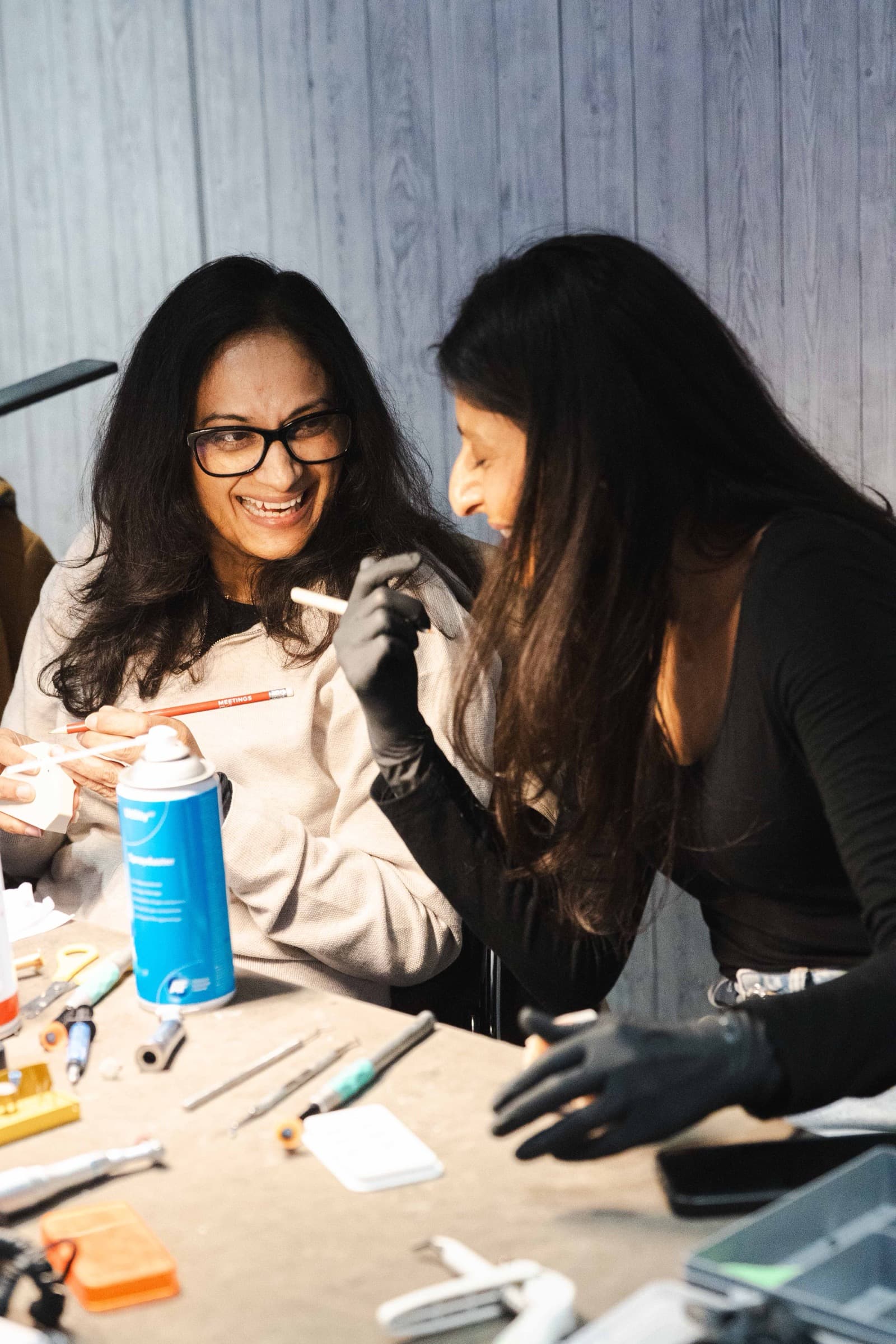
The common thread is correction. On a hands-on course an instructor looks at your tooth, tells you what’s wrong, and you fix it while it’s still soft. That loop, repeated across several teeth over two days, is what changes your Monday morning.
The honest comparison
- Cost: online is typically tens to a few hundred pounds; UK two-day hands-on courses roughly £1,300–£1,800 (Simplifi: £1,487.50 + VAT, with 0% instalment options available).
- Time: online is a few hours, whenever you like; hands-on is two days plus travel.
- What you can do afterwards. Online: explain the technique. Hands-on: do it, because you already have, six times, with feedback.
- CPD: both can be verifiable — check the stated hours and the certificate, not the format.
How to combine them
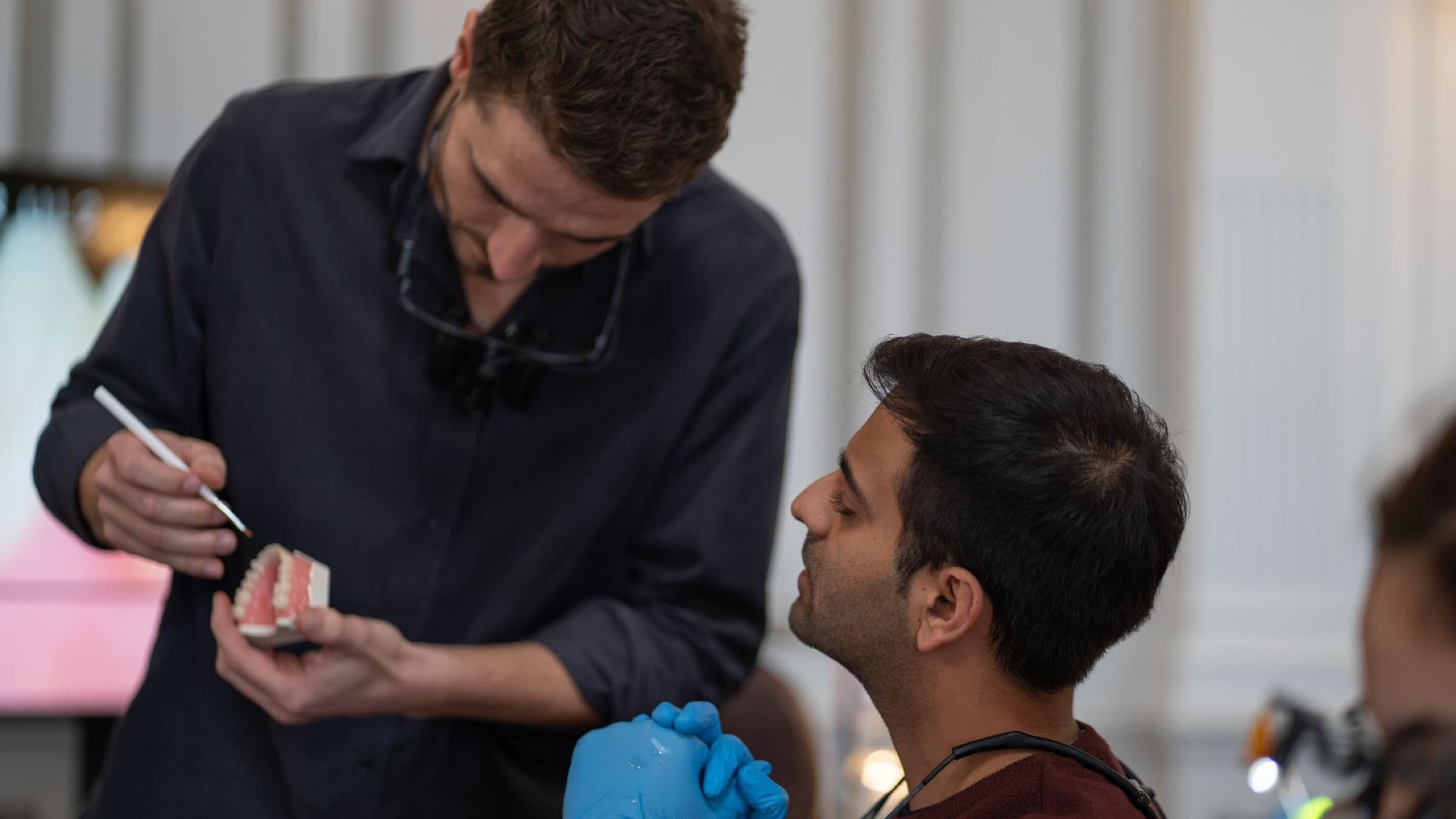
If budget or diary is the constraint, do theory first (an online course, the manufacturer’s material guides, a good textbook) so you arrive at the bench asking better questions. Then spend the money where the skill is built: a hands-on course where your work is checked regularly, with as many teeth per delegate as you can find. Afterwards, video is exactly right for refreshing a step before a case. And if you already hold a decent level of skill and practise it regularly, sometimes an online refresher is enough to inspire you: the hands-on is already there, so a bit of online theory can be exactly what helps at that point.