Buyer's guide
Composite bonding courses for newly qualified dentists: when to start and what to look for
Anterior composite is the skill patients ask for and the one that separates associates — and you don't need to be five years out to learn it properly. The honest timing for foundation dentists and first-year associates, what a course must give you at this stage, and how to pay for it.
 Dr Albert GajdosUpdated 20 September 20267 min read
If you are in foundation training or your first associate post, you already place composite every day — just not the kind patients ask for by name. Anterior composite bonding is the treatment that fills a young dentist’s book fastest, and the one that most clearly separates one associate from another. You do not need to be five years out to learn it properly; you do need to learn it in the right order. This guide covers timing, what a course has to give you at this stage, and the money.
Is it too early?

Not if you can place a decent Class II and would like to be as sure of an upper central. The mistake newly qualified dentists make is not going too early; it is going straight to a course built around advanced polychromatic layering, then discovering the problems in their own hands are isolation, bonding and contour. A fundamentals course that starts from a single-shade protocol fixes the foundations first, and gives you a result you can reproduce next week rather than a showreel case you can admire.
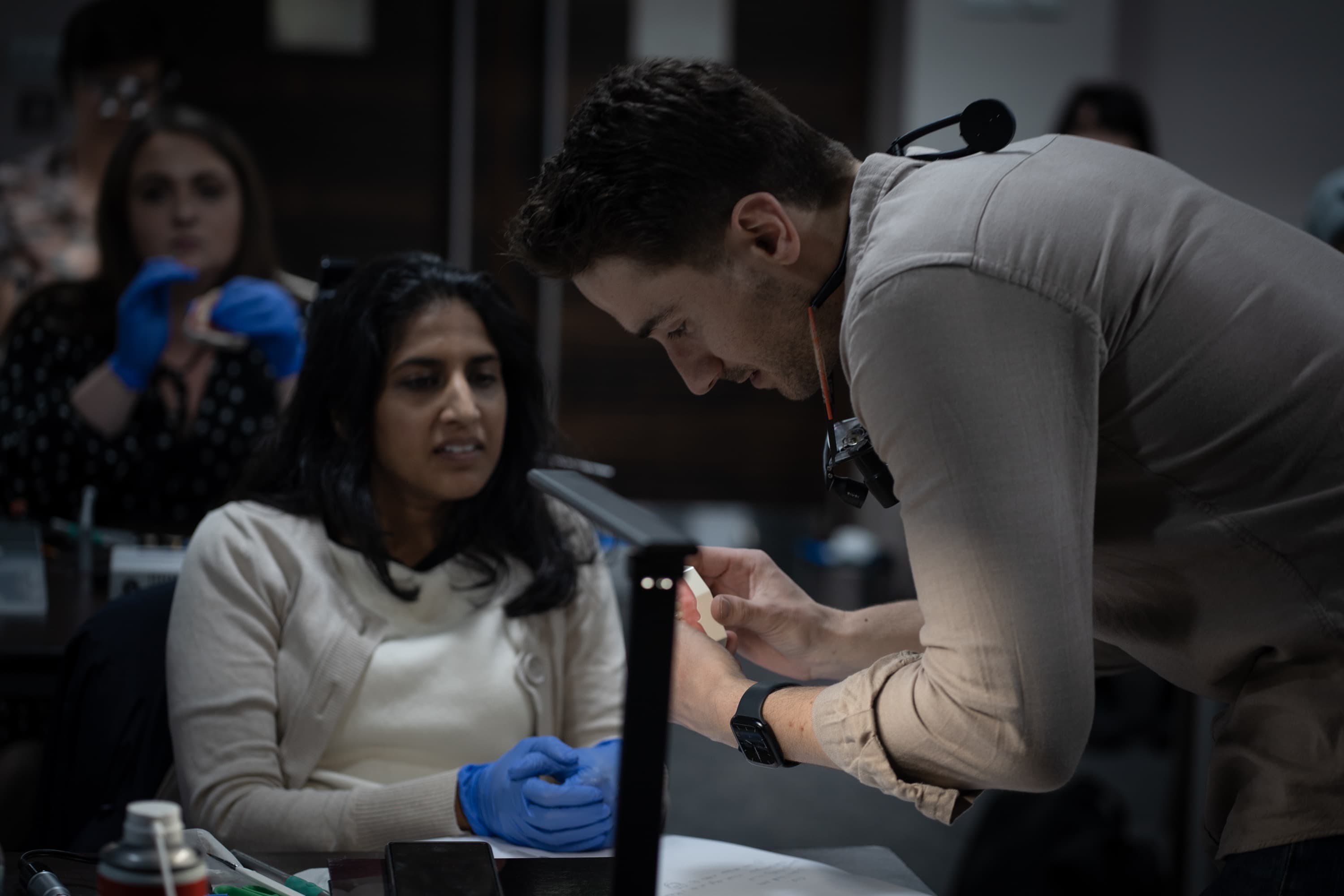
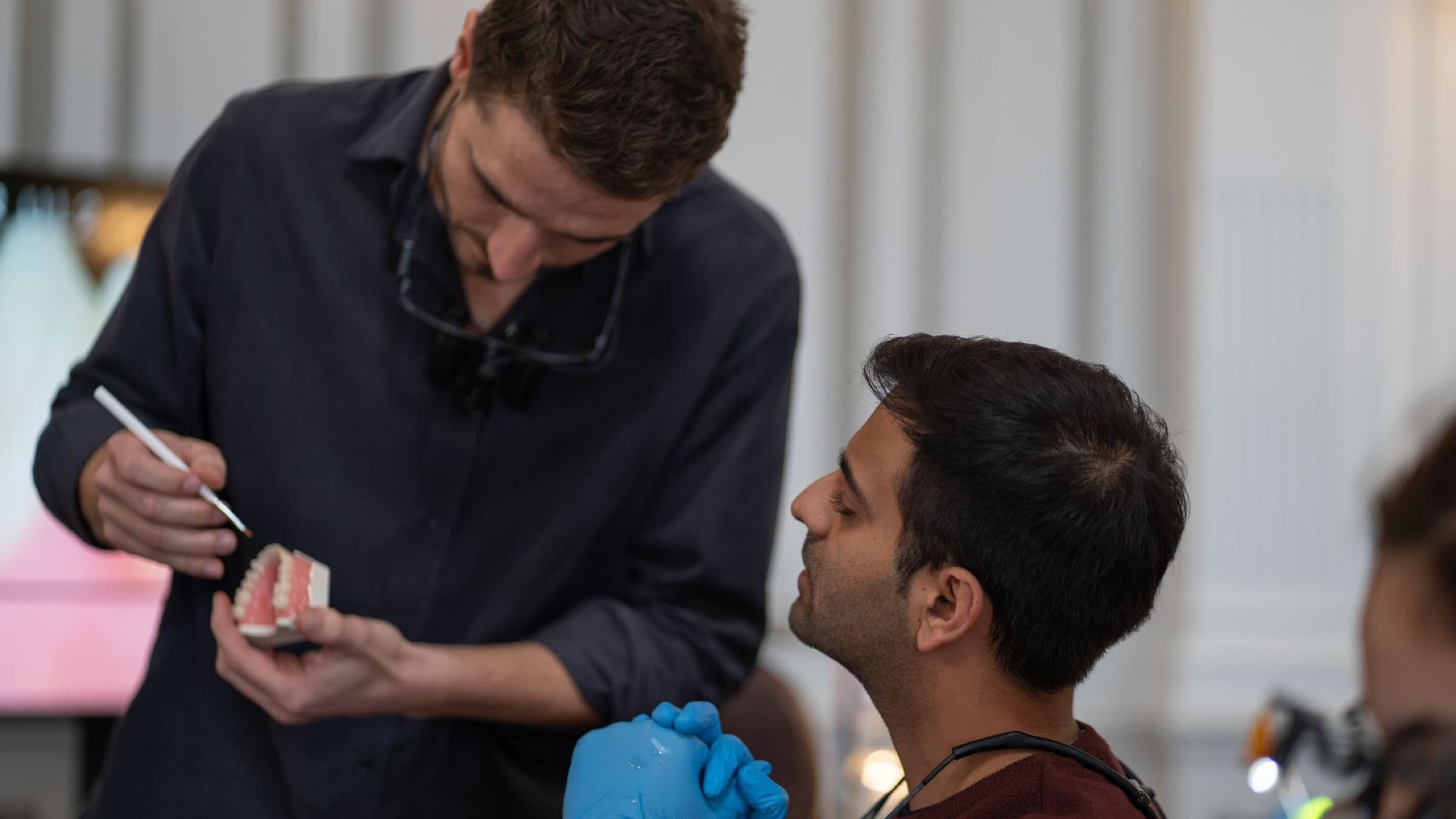
Simplifi Composite ‘The Original’ is written for exactly that range, new to intermediate, and newly qualified dentists sit alongside colleagues with ten years’ experience doing the same six teeth. Nobody is singled out, and nobody is left behind: Dr Albert constantly comes round to check your work and give advice.
During foundation training, or after?
Both work; they suit different people.
- During DFT. You have a structured year, protected study days and a supervisor whose job is your development. A weekend course fits around it, and if you tell your Educational Supervisor beforehand many will help you find suitable cases in the practice to apply it on — which is where the learning actually sticks. If you want the course to feature in your portfolio, raise it early.
- In your first associate year. The skill is directly billable and you control your own diary. Dentists at this stage often see the quickest return, because the cases are already walking through the door and being referred out or quoted low.
Either way, do it before the habits set. Finishing and polishing technique, in particular, is far easier to build than to unlearn.
What a course has to give you at this stage
- A protocol, not a performance. A repeatable sequence from case selection to polish that you can follow on Monday without the instructor in the room.
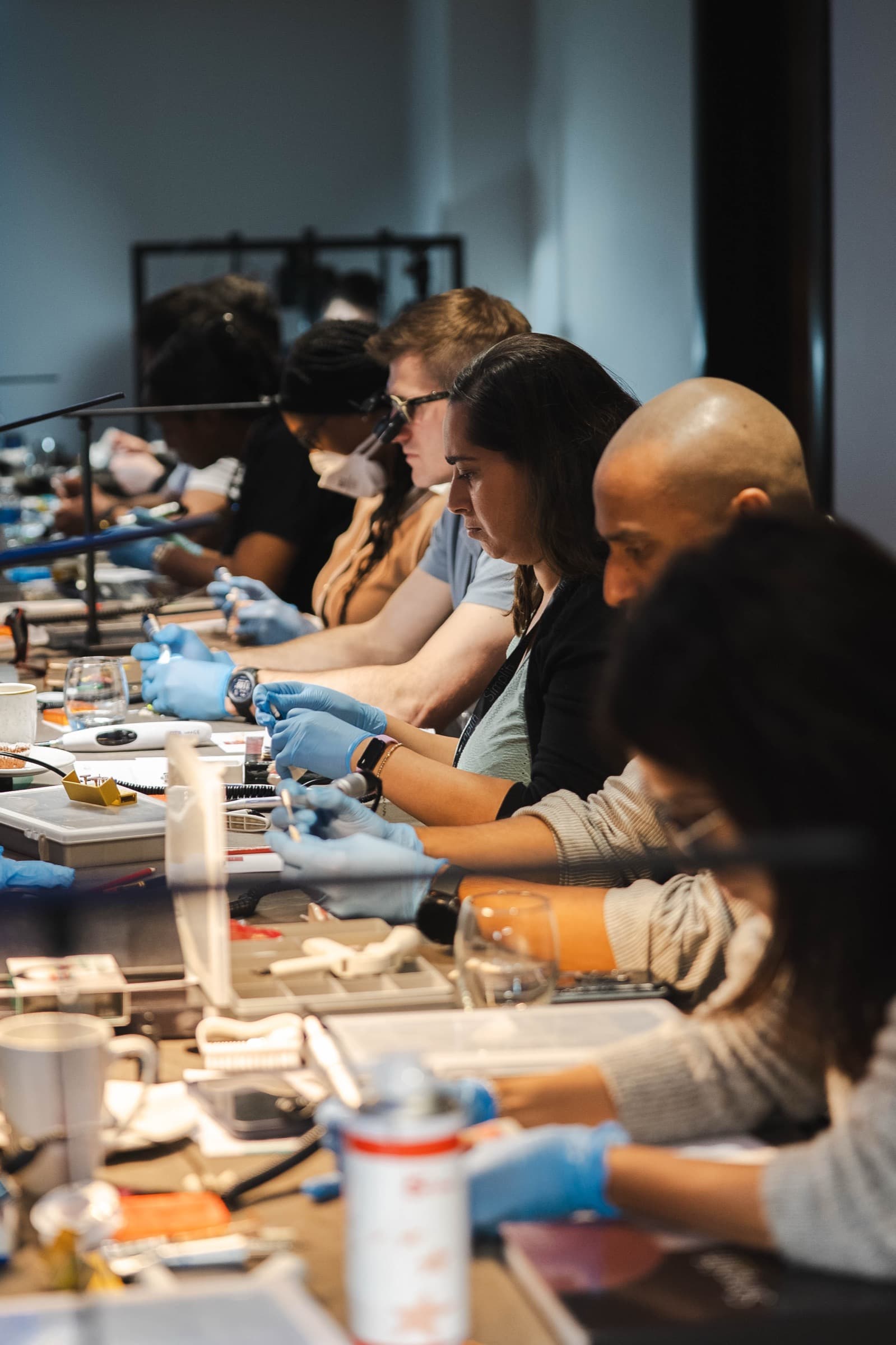
- Maximum hands-on. You should place several teeth yourself (single-shade veneers, edge bonding, a diastema) with someone guiding you and giving feedback as you go.
- Brand-neutral technique. As an associate you use the composite the practice stocks. A course tied to one system, or with a kit to buy, is a course you cannot fully use. Spending an extra £1,000 on kit after a course as a newly qualified dentist is often not ideal.
- A manual, a group and an Answerbot. A hardcover you will open chairside, a WhatsApp group where you can post a case at 6pm and get an answer, and the Simplifi Answerbot with case techniques on tap 24/7.
- Honest scope. A good course also teaches when not to bond, and what to refer — the judgement that keeps you out of trouble in year one.
- An instructor who checks your work. In a room of forty you will not be seen. Numbers should be capped at the point where the instructor comes round to check your work regularly — you cannot hide, which is the point.
Our guide to choosing a composite bonding course goes through each criterion in detail, with questions to ask any provider.
Composite veneers for beginners
Composite veneers sound advanced and are not. The beginner’s version is one shade and essential layering, six teeth on a model, with most of the time going on anatomy: line angles, emergence, the surface texture that decides whether it reads as a tooth. The order stays the same every time (smile design, isolation, adhesion, placement, finishing), so the hard part of anterior work is rarely the material. It is the anatomy and the sequence, and both are teachable in two days.
The money
A two-day hands-on course in the UK costs roughly £1,300–£1,800. Simplifi Composite is £1,487.50 + VAT (£1,785), with the option to pay in five monthly instalments of £357 at 0% APR. Three things worth knowing:
- Tax. Self-employed associates can usually treat a course that maintains or improves an existing skill as an allowable business expense. Foundation dentists are employed, so the position differs — ask an accountant rather than a forum.
- Payback. At typical private fees, a handful of edge-bonding or diastema cases covers the fee; the calculator in our cost guide lets you put in your own numbers.
- Booking. Most Simplifi dates sell out, and cancellations more than 30 days out are refunded minus a 10% admin fee or moved to another date — so book the date that suits you rather than waiting for certainty.
Start with Simplifi Composite
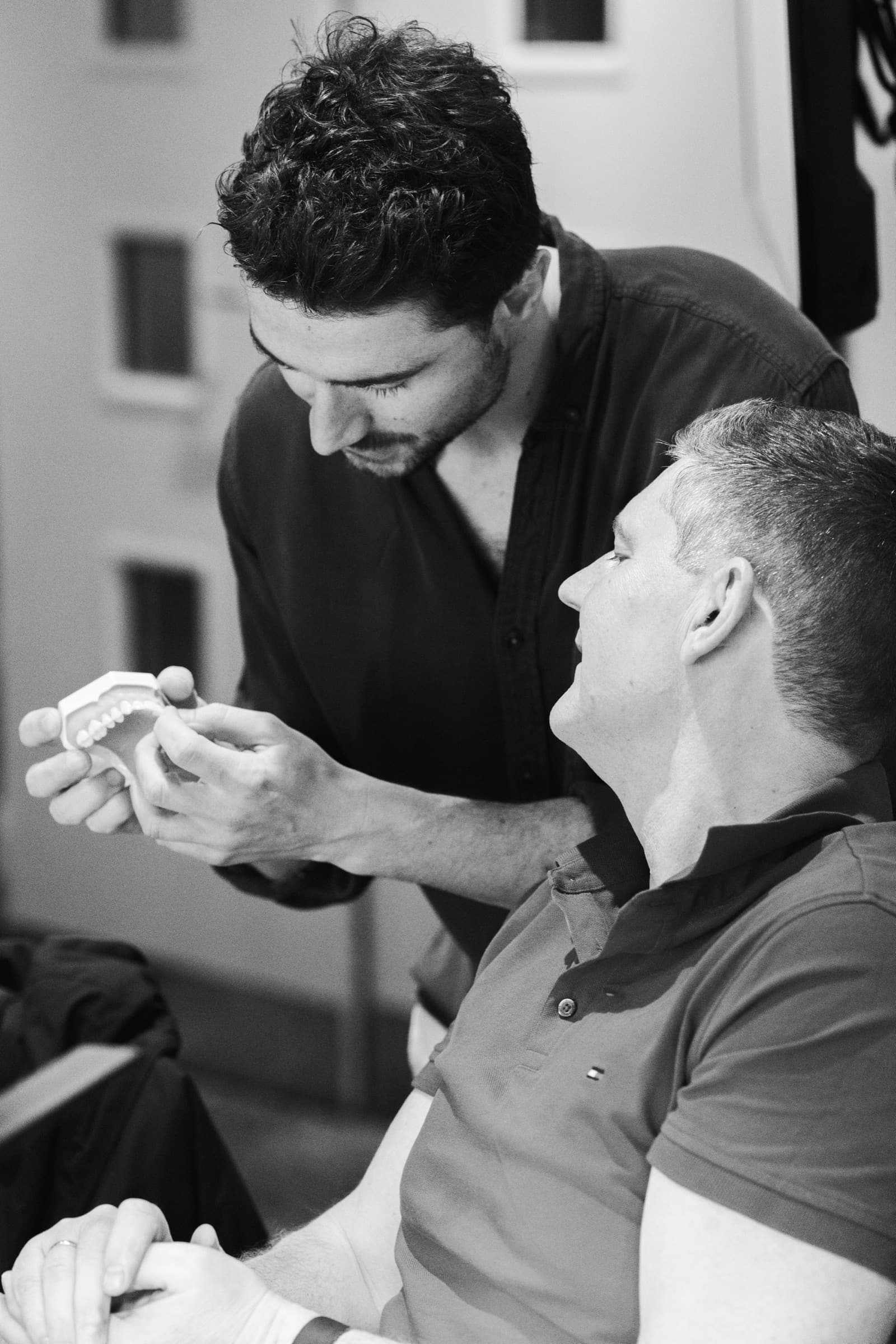
If you are new to composite, Simplifi Composite “The Original” is the course to book. It is built for exactly this stage: single-shade veneers, edge bonding, diastema and black-triangle closure and essential layering — the cases you will see most weeks — placed on six teeth yourself, with Dr Albert checking your work regularly. You leave with a protocol you can use on Monday, a 250-page hardcover manual and post-course support. Once you have a few cases under your belt, Simplifi Layering “The Next Level” — internal anatomy, characterisation and tinting — is the natural next step, and which course to take first explains when you are ready.
What you could be doing the week after
Edge bonding on chipped centrals. Closing a small diastema without orthodontics. A single-shade composite veneer on a discoloured lateral. Building a black-triangle case without the ledge. Choosing the right shade quickly and polishing so it stays polished. Simple, everyday cases, done predictably, and beginning to charge for your work properly.
Most people find it helpful to get a few of their regular patients lined up for treatment straight after the course, so you can apply the skill while it is fresh. And if you feel you struggle to get patients, the Simplifi Composite course covers communication and treatment uptake — that section will help you get your first case.